Table of Contents
ToggleThe Xbox 360 didn’t just launch, it exploded onto the gaming scene with a boldness that would define an entire generation. For anyone who lived through those years, you remember the midnight releases, the excitement of tearing open that box, and the first time you connected to Xbox Live with crystal-clear voice chat. But when exactly did this phenomenon begin, and what made the Xbox 360 such a pivotal moment in gaming history?
Microsoft’s second console hit stores on November 22, 2005, in North America, beating both the PlayStation 3 and Nintendo Wii to market by a full year. That head start wasn’t just luck, it was strategic warfare in the console wars, and it paid off in ways that still echo through gaming today. The 360 would go on to sell over 84 million units worldwide, but more importantly, it fundamentally changed how we play, compete, and connect online.
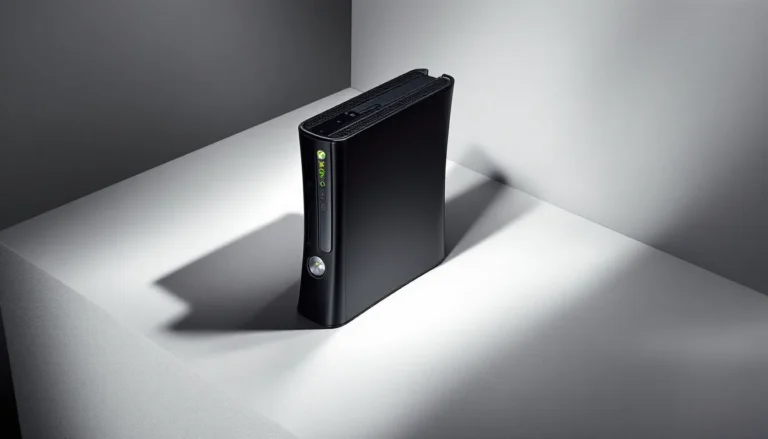
This is the complete story of when the Xbox 360 released, why it mattered, and how a white (and later black) box with a glowing ring became one of the most influential gaming platforms ever created.
Key Takeaways
- The Xbox 360 was released on November 22, 2005, in North America, giving Microsoft a full year advantage over PlayStation 3 and Nintendo Wii by launching ahead of the holiday shopping season.
- Xbox Live revolutionized online gaming by establishing unified voice chat, friends lists, achievements, and matchmaking—features that became the industry standard and influenced every modern gaming platform.
- The Xbox 360 introduced Gamerscore and achievements as a system-wide feature, creating a gamification model that extended game lifespans and influenced how developers design engagement mechanics today.
- Despite the Red Ring of Death hardware crisis that affected early models at catastrophic failure rates, the platform’s strong game library and online experience retained millions of players and led to successful hardware revisions like the Slim model.
- Exclusive franchises like Halo 3, Gears of War, and Call of Duty 2 established the Xbox 360 as the dominant platform for Western gamers, particularly in North America and the UK, by delivering flagship titles that rivals couldn’t match.
The Official Xbox 360 Release Date: A Global Rollout
North America: November 22, 2005
Microsoft chose November 22, 2005, for the North American launch, strategically positioning the console just ahead of Black Friday and the holiday shopping rush. This wasn’t an accident, the company wanted maximum retail exposure during the busiest shopping season of the year.
The launch was chaotic in the best way. Stores across the U.S. and Canada saw lines forming hours before midnight, with some gamers camping out for days to secure a unit. Microsoft had shipped approximately 300,000 consoles for launch day, which sounds impressive until you realize demand far exceeded supply. Shortages persisted well into 2006, with consoles selling out within minutes of restocking.
The timing also meant Microsoft beat Sony and Nintendo to the seventh generation by a significant margin. That year-long head start gave the 360 time to build its library, refine Xbox Live, and establish itself before the competition even arrived.
Europe and Japan: December 2005
European gamers got their hands on the Xbox 360 on December 2, 2005, just 10 days after the North American launch. The rollout covered major markets including the UK, France, Germany, Spain, and Italy, though supply issues plagued Europe even more severely than North America.
Japan’s launch came on December 10, 2005, but the reception was notably cooler. Microsoft shipped only 159,000 units for the Japanese launch, and many remained unsold on store shelves, a stark contrast to the frenzied demand elsewhere. The Xbox brand had struggled in Japan with the original console, and even though efforts to court Japanese developers and gamers, the 360 would face similar challenges throughout its lifespan.
The global rollout strategy was ambitious but revealed Microsoft’s priorities: dominate North America and Europe first, then tackle the notoriously difficult Japanese market. It was a calculated risk that mostly paid off, even if Japan remained PlayStation territory.
What Led to the Xbox 360’s Creation?
Learning from the Original Xbox
The original Xbox, launched in 2001, was both a success and a lesson in humility for Microsoft. It sold approximately 24 million units, respectable for a first attempt, but nowhere near the PlayStation 2’s dominance. Microsoft lost billions on the venture, primarily due to expensive hardware manufacturing deals and a late start in the generation.
But the original Xbox proved several crucial points: there was room for a third major console manufacturer, Xbox Live was revolutionary, and Western gamers were hungry for powerful hardware and online shooters. The original Xbox 360 hardware team took these lessons seriously when designing the successor.
Microsoft also learned from its mistakes. The original Xbox used expensive, off-the-shelf PC components that killed profit margins. For the 360, the company partnered with IBM for a custom PowerPC-based tri-core processor (Xenon) and ATI (later AMD) for a custom GPU (Xenos), giving them better control over costs and performance.
The name change itself was strategic. “Xbox 2” would’ve sounded inferior next to “PlayStation 3,” so Microsoft landed on Xbox 360, suggesting a complete, all-encompassing experience rather than just a sequel.
Competing in the Seventh Console Generation
By 2005, the writing was on the wall: the next console generation would be defined by HD graphics, online connectivity, and multimedia capabilities. Microsoft saw an opportunity to beat Sony to market and establish dominance before the PlayStation 3 arrived.
The competitive landscape was shifting dramatically. Nintendo was developing the Wii with its motion controls, targeting a casual audience that barely overlapped with Microsoft’s demographic. Sony’s PlayStation 3, announced in 2005 with a planned 2006 launch, promised powerful hardware with the new Blu-ray format but came with production delays and a controversial $599 price tag.
Microsoft positioned the 360 as the gamer’s console, powerful enough for next-gen experiences, affordable enough to gain market share, and with the most mature online infrastructure in gaming. The strategy was to grab as much market share as possible before Sony and Nintendo could react, building an install base that would attract exclusive games and third-party support.
Xbox 360 Launch Models and Editions
Core vs. Premium: The Two Launch SKUs
Microsoft launched with two distinct models, and the choice between them sparked countless forum debates. The Xbox 360 Core retailed for $299 and included the bare minimum: the console, wired controller, and standard AV cables. No hard drive, no wireless controller, no component cables for HD output.
The Xbox 360 Premium (also called the Pro) cost $399 but delivered what most gamers actually wanted: a 20GB hard drive, wireless controller, component HD cables, and a headset. The hard drive was crucial, it enabled game installations, downloadable content, and original Xbox backward compatibility.
In retrospect, the Core model was a mistake. It confused consumers, and its lack of a hard drive limited functionality so severely that most gamers avoided it. Microsoft would quietly phase it out in favor of the Arcade model in 2007, which at least included memory cards and more pack-in content.
The Premium became the standard for good reason. That 20GB hard drive felt massive in 2005 (narrator: it wasn’t), and having everything you needed in one box made the $100 premium worth it for serious gamers.
Later Revisions: Elite, Arcade, and Slim Models
Microsoft continuously refined the Xbox 360 hardware throughout its lifespan, responding to both technical issues and market demands. The Xbox 360 Elite launched in 2007 with a 120GB hard drive, HDMI output (critically absent at launch), and a sleek black finish. It addressed complaints about storage and HD output at a premium $479 price point.
The Xbox 360 Arcade, replacing the Core in 2007, came with 256MB of onboard memory and several pack-in arcade games. Priced at $279, it targeted casual gamers and families, though the lack of a hard drive still limited its appeal.
The biggest revision came in 2010 with the Xbox 360 S (Slim), a complete hardware redesign. It was smaller, quieter, cooler, and included built-in 802.11n Wi-Fi, finally ending the need for Microsoft’s overpriced wireless adapter. The Slim also featured a 250GB hard drive, touch-sensitive buttons, and most importantly, addressed the Red Ring of Death issues that had plagued earlier models.
A final revision, the Xbox 360 E, arrived in 2013, borrowing design cues from the Xbox One. It was essentially a cost-reduced Slim with fewer ports, aimed at budget buyers as the platform wound down.
Revolutionary Features That Defined the Xbox 360 Era
Xbox Live: Online Gaming Goes Mainstream
Xbox Live wasn’t new to the 360, it debuted on the original Xbox, but the 360 version transformed it from a novelty into an essential part of gaming. At launch, Xbox Live offered unified voice chat, friends lists, achievements, and seamless matchmaking across all games. Sony’s PlayStation Network wouldn’t arrive until a year later, and even then, it lacked the polish and features that Xbox 360 Gold membership provided.
The integration was key. Every game used the same system for invites, parties, and voice chat. You could check on friends from the dashboard, jump into their games, and talk strategy without alt-tabbing or launching separate apps. This seems basic now, but in 2005, it was revolutionary.
Xbox Live Marketplace launched alongside the console, offering game demos, trailers, downloadable content, and eventually full game downloads. The idea of buying games digitally was still novel, most gamers were skeptical that anyone would download multi-gigabyte files when physical discs were so convenient. By the end of the 360’s life, digital sales would account for a significant portion of revenue.
The subscription model ($49.99/year for Gold) was controversial but sustainable. It funded the infrastructure and gave Microsoft resources to continually improve the service. Free alternatives existed, but Xbox Live’s reliability and feature set justified the cost for most gamers.
HD Gaming and Graphics Capabilities
The Xbox 360 was designed for the HD era, supporting 720p and 1080p output when most gamers still owned standard-definition TVs. The leap from 480i to 720p was staggering, textures were sharper, environments more detailed, and the overall visual fidelity made sixth-gen games look ancient by comparison.
Under the hood, the custom ATI Xenos GPU featured 512MB of shared GDDR3 RAM (split with the CPU) and supported unified shader architecture, a relatively new approach that gave developers more flexibility. The tri-core IBM Xenon CPU at 3.2GHz was powerful but notoriously difficult to optimize for, requiring developers to embrace multi-threaded programming.
Games like Gears of War (2006) and BioShock (2007) showcased what the hardware could do, delivering visuals that genuinely felt next-gen. The Unreal Engine 3 became the middleware of choice, powering countless 360 titles with its robust toolset and impressive lighting capabilities.
The 360 also introduced anti-aliasing and anisotropic filtering as standard expectations, smoothing jagged edges and sharpening textures in ways that made games more immersive. Performance targets settled around 30 FPS for cinematic experiences and 60 FPS for competitive shooters and racing games, a balance that defined the generation.
The Xbox 360 Controller: A New Standard
The Xbox 360 controller refined the already excellent “Duke” and Controller S from the original Xbox, creating what many still consider the gold standard for gamepad design. The symmetrical analog stick layout, comfortable grip, and well-placed buttons felt natural after just minutes of use.
Key improvements included wireless connectivity via proprietary 2.4GHz RF (not Bluetooth), a Guide button for instant dashboard access, and redesigned triggers with better resistance curves. The bumpers were more accessible, and the overall build quality was solid, these controllers could withstand years of button-mashing and analog stick abuse.
The rechargeable battery system was clever but expensive. The controller shipped with a AA battery pack, and Microsoft sold separate rechargeable battery packs and charging stations. It was a revenue stream, sure, but it also meant you could instantly swap batteries mid-session instead of waiting for a charge.
This controller’s design was so successful that it influenced the entire industry. The PlayStation 3’s DualShock 3 added triggers (sort of) in response, and the Xbox One controller made only minor refinements. Even today, PC gamers often default to Xbox-style controllers because the button prompts and compatibility are so widespread.
Launch Titles and Early Game Library
Key Launch Games That Made an Impact
The Xbox 360 launched with 18 titles in North America, a respectable but not overwhelming lineup. Call of Duty 2 emerged as the system seller, an intense WWII shooter that demonstrated HD graphics, cinematic audio, and the potential of next-gen gaming. Its 60 FPS gameplay was buttery smooth, and the beach landing sequence in the opening mission became iconic.
Perfect Dark Zero, a long-awaited sequel from Rare, was meant to be the flagship exclusive but landed with mixed reception. It looked impressive in screenshots but felt sluggish in gameplay, and reviews were lukewarm. Still, it moved units based on brand recognition alone.
Kameo: Elements of Power, also from Rare, was a colorful action-adventure title that showed off the system’s graphics and served as a solid family-friendly option. Project Gotham Racing 3 delivered stunning visuals and tight arcade racing, while NBA 2K6 and Madden NFL 06 gave sports fans reasons to upgrade.
Notably absent: Halo. Bungie’s flagship franchise wouldn’t arrive until Halo 3 in 2007, leaving the launch window without Microsoft’s biggest gun. This was risky but necessary, rushing Halo would’ve been worse than delaying it.
The launch lineup wasn’t perfect, but it had enough variety and at least one killer app in Call of Duty 2 to justify early adoption. Within months, the library would expand rapidly.
Exclusive Franchises That Built the Platform
The Xbox 360’s long-term success hinged on exclusive franchises that gave gamers reasons to choose it over PlayStation 3 or Wii. Gears of War (November 2006) was the first true system-defining exclusive, delivering brutal third-person action, stunning Unreal Engine 3 visuals, and a co-op campaign that became a template for the genre.
Halo 3 (September 2007) shattered records, earning $170 million in its first 24 hours and becoming a cultural phenomenon. The game’s campaign concluded Master Chief’s initial trilogy, but multiplayer kept players engaged for years. Forge mode and Theater mode added unprecedented creative and replay value.
Forza Motorsport emerged as the 360’s Gran Turismo killer, offering deep simulation, car customization, and online competition. Fable II (2008) brought Peter Molyneux’s ambitious RPG vision to life, while Left 4 Dead (2008, console exclusive) revolutionized co-op zombie shooters.
Timed exclusives mattered too. BioShock (2007) launched a year early on 360, as did Mass Effect (2007), giving Microsoft massive advantages in mindshare even though both eventually reached PlayStation. Alan Wake (2010) and Crackdown (2007) rounded out a portfolio that emphasized shooters, action games, and Western RPGs, a clear contrast to PlayStation’s Japanese-influenced library.
These exclusives, combined with superior versions of multiplatform games (thanks to easier development tools), made the 360 the default choice for many Western gamers.
Challenges and Controversies During the Xbox 360 Lifespan
The Red Ring of Death Crisis
No discussion of the Xbox 360 is complete without addressing the Red Ring of Death (RROD), the three flashing red lights that signaled hardware failure and struck fear into millions of gamers. The issue stemmed from poor thermal design, the GPU and CPU generated excessive heat, causing solder joints to crack and components to fail.
Failure rates were catastrophic. While Microsoft never released official numbers, independent estimates suggested failure rates between 23% and 54% for launch consoles. Entire forums were dedicated to troubleshooting, temporary fixes (the infamous “towel trick”), and tales of woe from gamers who’d gone through multiple replacements.
Microsoft’s response evolved from denial to damage control. In July 2007, the company extended warranties to three years for RROD-specific failures and took a $1.15 billion charge to cover repairs and replacements. It was a massive financial hit but necessary to preserve the brand.
The hardware revisions, particularly the Jasper chipset in late 2008 and the Slim in 2010, finally addressed the thermal issues with better cooling, refined manufacturing, and smaller die processes. If you bought a 360 Slim, RROD was essentially a non-issue.
Even though the crisis, most gamers stuck with the platform, a testament to how strong the games and online experience were. But the RROD remains a cautionary tale about rushing hardware to market without adequate testing.
Competition from PlayStation 3 and Nintendo Wii
The PlayStation 3 launched in November 2006 at $499 (20GB) and $599 (60GB), a price point that shocked consumers and gave the 360 a massive affordability advantage. Sony’s console was technically more powerful with its Cell processor and Blu-ray drive, but it was notoriously difficult to develop for, leading to inferior ports of multiplatform games throughout the generation’s early years.
Microsoft capitalized ruthlessly. Marketing emphasized the 360’s superior online features, better game performance, and lower price. Major Xbox 360 shooting games like Call of Duty and Battlefield became de facto 360 games in North America, with the majority of online players choosing Microsoft’s platform.
The Nintendo Wii, launching in November 2006 at $249, was a different beast entirely. It targeted a casual audience with motion controls and family-friendly games, barely competing with the 360 and PS3 for core gamer attention. The Wii outsold both consoles, but its lack of third-party support and HD graphics kept it in a separate category.
By the generation’s midpoint, the 360 had established dominance in North America and the UK, while PlayStation 3 held strong in Europe and dominated Japan. The competition pushed both companies to innovate, Microsoft launched Kinect, Sony introduced PlayStation Move, and both platforms saw price cuts and hardware revisions that extended the generation far longer than expected.
How the Xbox 360 Changed Gaming Forever
Setting the Foundation for Modern Online Gaming
The Xbox 360 established the framework that modern online gaming still uses. Unified friends lists, party chat, matchmaking, and digital storefronts are so standard now that it’s easy to forget they weren’t always guaranteed features. Sony’s PlayStation Network, Steam’s community features, and even modern mobile gaming all borrowed concepts that Xbox Live popularized on the 360.
Party chat, introduced in the Fall 2008 dashboard update, was a game-changer. You could talk to friends regardless of what game they were playing, coordinating across different titles or just hanging out while gaming separately. It created persistent social spaces and made Xbox Live feel less like a gaming service and more like a social platform.
The 360 also pioneered seasonal content and live service models. Games like Gears of War and Halo 3 received map packs and updates that extended their lifespans for years. Call of Duty became an annual juggernaut partly because the 360’s online infrastructure made multiplayer so accessible and addictive.
According to Windows Central, Xbox Live peaked at over 48 million active users by the end of the 360’s lifecycle, an astonishing number that demonstrated how central online connectivity had become to console gaming.
Achievements and Gamerscore: Gamification Perfected
Achievements and Gamerscore seem obvious now, but they were revolutionary in 2005. Every game shipped with 1,000 Gamerscore distributed across various achievements, ranging from simple (complete the tutorial) to punishing (finish on the hardest difficulty without dying). Later, DLC could add up to 250 additional points.
The psychology was brilliant. Achievements tapped into completionist tendencies, turned mundane tasks into goals, and created competition among friends. Leaderboards compared Gamerscore totals, and dedicated players hunted easy achievements in terrible games just to boost their numbers.
Achievements influenced game design, too. Developers used them to encourage exploration, reward skillful play, and extend replay value. Some achievements became infamous, Mile High Club in Call of Duty 4 and Seriously… in Gears of War demanded ridiculous skill and dedication.
Sony copied the system with PlayStation Trophies in 2008, but Xbox had the head start. Gamerscore became a status symbol in gaming communities, and chasing achievements became a meta-game unto itself. Entire websites like TrueAchievements emerged to track progress, offer guides, and foster communities around achievement hunting.
Media outlets like The Verge have covered how achievements fundamentally changed player behavior, extending game lifespans and creating engagement metrics that developers still obsess over today.
When Did the Xbox 360 Era End?
Production Discontinuation and Xbox One Transition
Microsoft officially discontinued Xbox 360 production on April 20, 2016, marking the end of a 10.5-year production run. By that point, the console had long been overshadowed by its successor, the Xbox One, which launched in November 2013.
The transition was messy. The Xbox One’s initial reveal focused heavily on TV integration, Kinect requirements, and always-online DRM that gamers rejected loudly and immediately. Sony capitalized with the PlayStation 4, and Microsoft spent much of the Xbox One’s early life backtracking on unpopular decisions.
Ironically, the 360 continued selling well into the Xbox One era. Its massive library, low price (often under $199 with bundles), and established install base made it an attractive option for budget gamers and families. Microsoft continued supporting the platform with Xbox Live updates and even released new games like Fable Anniversary (2014) well after the Xbox One launched.
Backward compatibility became a major Xbox One feature in 2015, allowing hundreds of 360 games to run on the new console via emulation. This softened the transition for gamers with large digital libraries and preserved the 360’s legacy in a way that few consoles have enjoyed.
The final 360 game, Just Dance 2019, released in October 2018, an astounding 13 years after the console’s launch, a testament to its enduring install base and appeal.
The Xbox 360’s Lasting Legacy in 2026
As of 2026, the Xbox 360 remains relevant in ways few consoles manage decades after discontinuation. Emulation projects are making progress, though legal Xbox 360 emulation on PC is still early compared to PlayStation 3. Original hardware is still widely available on the used market, though finding working units with functional disc drives can be challenging due to wear and the common disc reading issues that plague aging optical drives.
The 360’s influence on modern gaming is undeniable. Every major platform now uses achievement systems, unified online services, party chat, and digital storefronts, all concepts the 360 perfected. The controller design informed the Xbox One and Series X
|
S controllers, with only minor refinements over two decades.
Culturally, the 360 era defined a generation of gamers. For millennials and older Gen Z players, memories of Halo 3 LAN parties, Call of Duty: Modern Warfare 2 multiplayer, and Red Dead Redemption‘s open world are as vivid as their formative years. The console sat at the intersection of online gaming going mainstream and HD graphics becoming standard, a perfect storm that created unforgettable experiences.
According to Pure Xbox, Xbox 360 backward compatibility on Xbox Series X
|
S has introduced the console’s library to a new generation, with enhanced performance and resolution breathing new life into classics. Games like Red Dead Redemption and Fallout 3 run better on Series X than they ever did on original hardware.
The legacy is secure: the Xbox 360 was more than a console, it was the platform that made online gaming essential, achievements standard, and HD visuals expected. Its impact shaped the industry in ways we’re still discovering.
Conclusion
The Xbox 360’s release on November 22, 2005, wasn’t just a product launch, it was the beginning of a paradigm shift in how we experience games. Microsoft’s aggressive timing, feature-rich online service, and commitment to the core gaming audience created a platform that defined a generation and influenced every console that followed.
From the midnight launch lines to the Red Ring of Death controversy, from Halo 3’s record-breaking debut to the refinement of party chat and achievements, the 360’s decade-plus run was packed with triumphs, failures, and lessons learned. It proved that a relative newcomer could compete with entrenched giants, that online connectivity was the future, and that gamers would embrace digital distribution if the experience was right.
More than 20 years after its launch, the Xbox 360’s DNA lives on in every modern console, every achievement notification, and every party chat conversation. For those who were there, the memories remain sharp. For those discovering its library through backward compatibility, the games still hold up. The Xbox 360 era has ended, but its legacy is permanent.